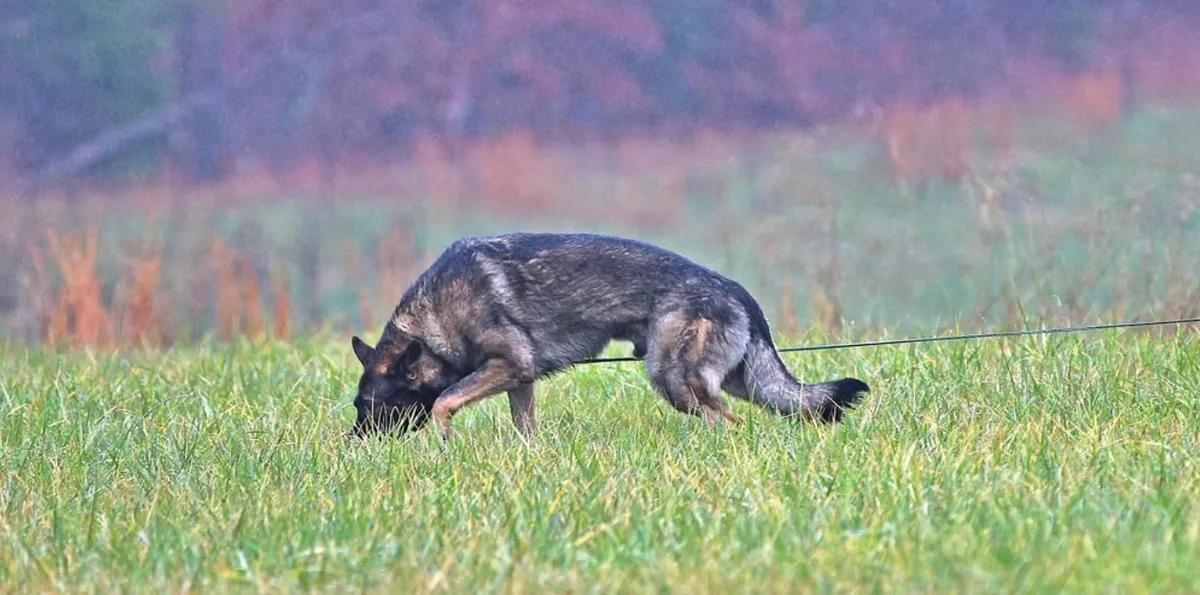
What's The Difference Between Tracking, Air Scenting & Mantrailing
What's the difference between Tracking, Air Scenting and Mantrailing?
If you’re new to scent work, the terms tracking, Mantrailing and air scenting can sound pretty interchangeable.
But while all three activities involve dogs using their noses, the way dogs search, process scent and work with their handler is actually very different.
Understanding those differences can help handlers choose the right activity for their dog and better understand what they’re seeing on the end of the line.
What Is Tracking?
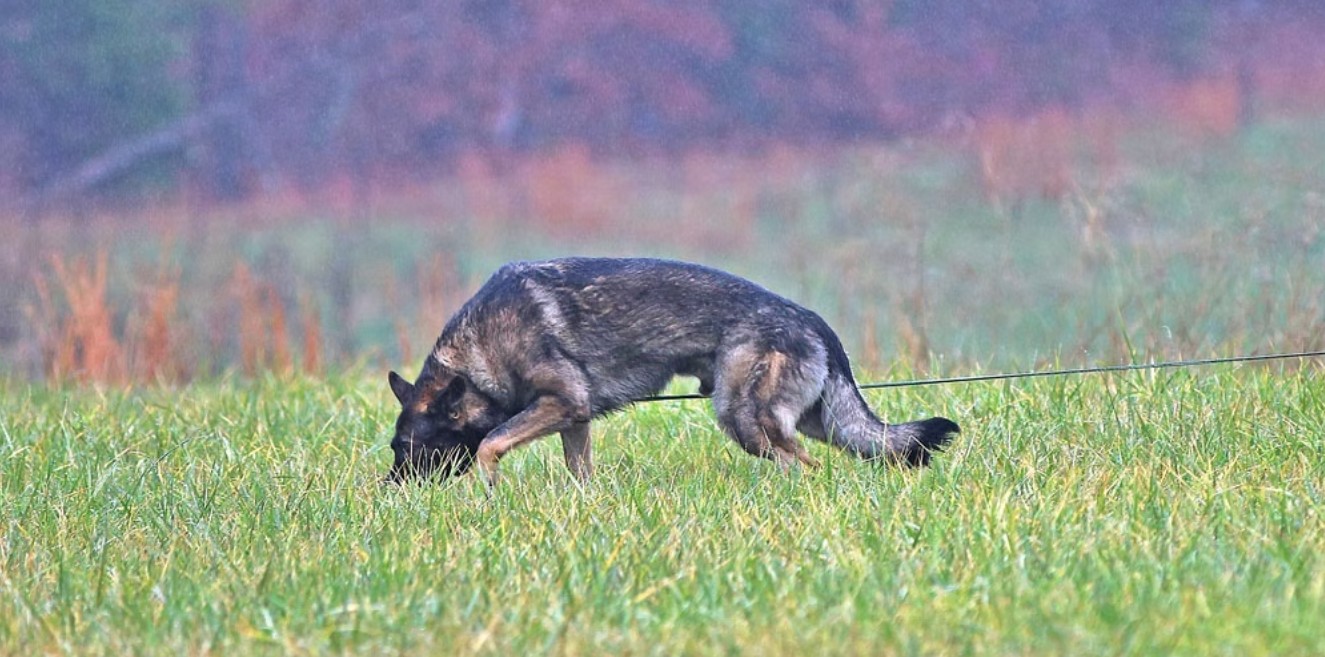
Tracking is a highly structured scent sport focused on following ground disturbance.
In sports like IPO/IGP tracking, the dog learns that disturbed ground and crushed vegetation hold value. The goal is precision and consistency.
Tracking dogs are typically expected to:
Keep their nose deep in the footsteps
Follow the exact track laid by the person
Indicate articles placed along the track
Maintain accuracy without drifting off the line
In competition tracking, dogs are judged heavily on:
Precision
Intensity
Article indication
Commitment to the exact track
If the dog leaves the track or cuts corners, points are lost.
Tracking is very technical and methodical, requiring concentration, control and careful scent discrimination.
Where Is Air Scenting?
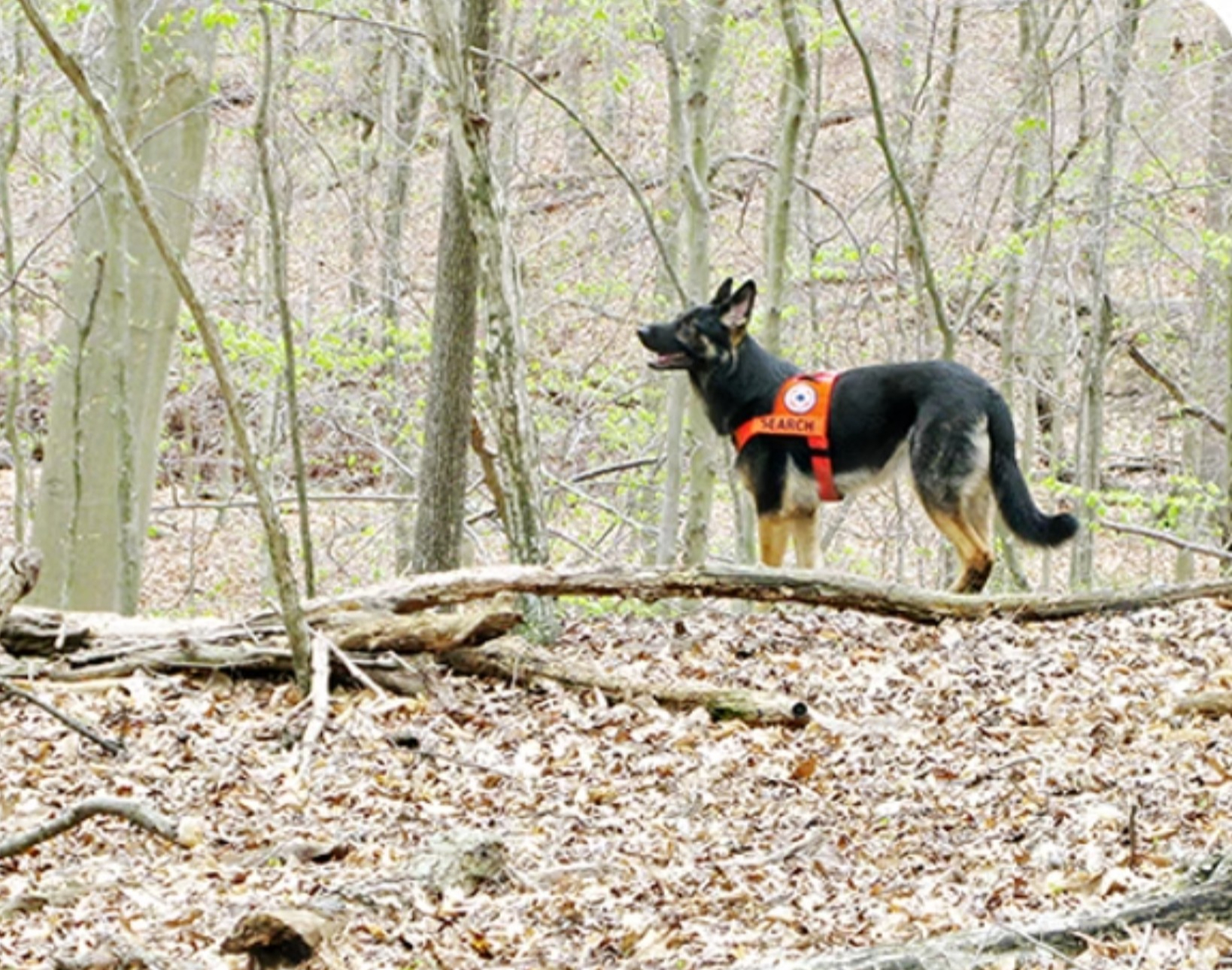
Air scenting works differently.
Rather than following a specific trail left on the ground, air scent dogs search for human scent carried through the air currents around them.
These dogs are often used in:
Search and rescue
Wilderness searches
Disaster response
Area searches
Instead of moving step-by-step along a trail, air scent dogs work larger areas, catching scent cones as airborne particles drift through the environment.
You’ll often see:
Higher head carriage
Wide searching patterns
Fast directional changes
Dogs working into wind currents
What Is Mantrailing?
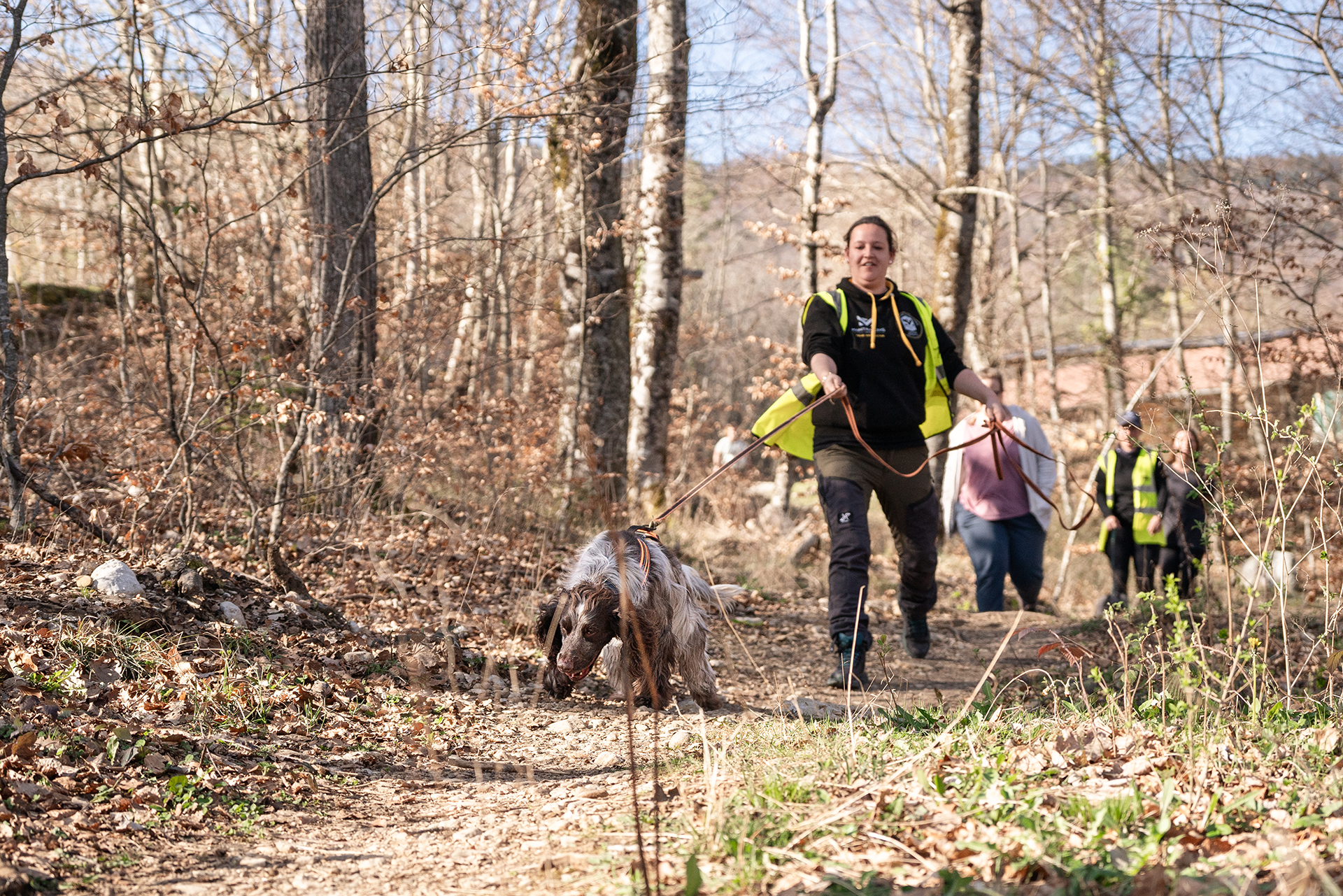
Mantrailing is much more flexible.
In reality, many Mantrailing dogs naturally use elements of both tracking and air scenting during a trail.
In Mantrailing the dog’s goal is simply to locate the trail layer using whatever scent information is available to them, utilising all of their scenting skills.
That may include:
Ground scent
Crushed vegetation
Skin rafts
Airborne scent particles
Human odour carried by wind and environment
And this is where handlers often get confused.
In Mantrailing, dogs are not expected to stay perfectly 'on the trail' because we don’t actually know where the scent trail is moving.
Unlike visible footsteps, scent is dynamic.
It shifts constantly based on things like:
Wind
Humidity
Temperature
Buildings
Terrain
Air movement
So while handlers may think the trail should go one way, the dog follow it somewhere completely different because they’re processing scent information we can’t see.
And honestly? That’s exactly what we want.
The dog’s job is not to follow a perfect line.
The dog’s job is to find the person as efficiently as possible.
The Biggest Difference? The Handler’s Role
One of the biggest distinctions between tracking, air scenting and Mantrailing is the relationship between the dog and handler during the search.
In tracking, the handler follows a much more structured process while the dog focuses on staying accurate to the laid track. The goal is precision, consistency and remaining on the exact path.
In air scenting, handlers are often directing search patterns and working strategically with wind direction, terrain and coverage areas while the dog searches for airborne human scent moving through the environment. The dog works more independently, often covering large areas quickly until they catch scent in the air.
In Mantrailing, the handler’s role becomes much more dynamic and observational.
The handler needs to:
Read behavioural changes
Interpret scent information
Observe body language
Trust the dog’s decisions
Work as a team
Because the reality is:
We cannot see scent.
Only the dog can.
It's the dog's job to read the scent, and the handler's job to read the dog.
So Which One Is Better?
None of them are 'better'.
They’re simply different scent disciplines with different goals.
Tracking focuses on precision
Air scenting focuses on locating airborne odour
Mantrailing combines problem-solving, scent discrimination and utilising all scenting skills to locate a specific person
And that’s part of what makes scent work so fascinating. Dogs are capable of adapting their incredible noses to solve problems in completely different ways.
What Does Science Say About Human Scent?
Interestingly, science still doesn’t fully understand exactly which components of human scent dogs use most successfully during trailing searches.
What has been scientifically proven is that dogs can identify and discriminate individual human odours at an extraordinary level, including scent linked to DNA.
But when it comes to how scent moves through environments, there’s still a huge amount we’re learning from the dogs themselves every day.
Love learning about Mantrailing? Join our Online Mantrailing Club for in-depth training, video lessons and on-going support: